Should the Owner Become the Face of the Business?
By Marcela Arenas — — Strategy
Should the Owner Become the Face of the Business?
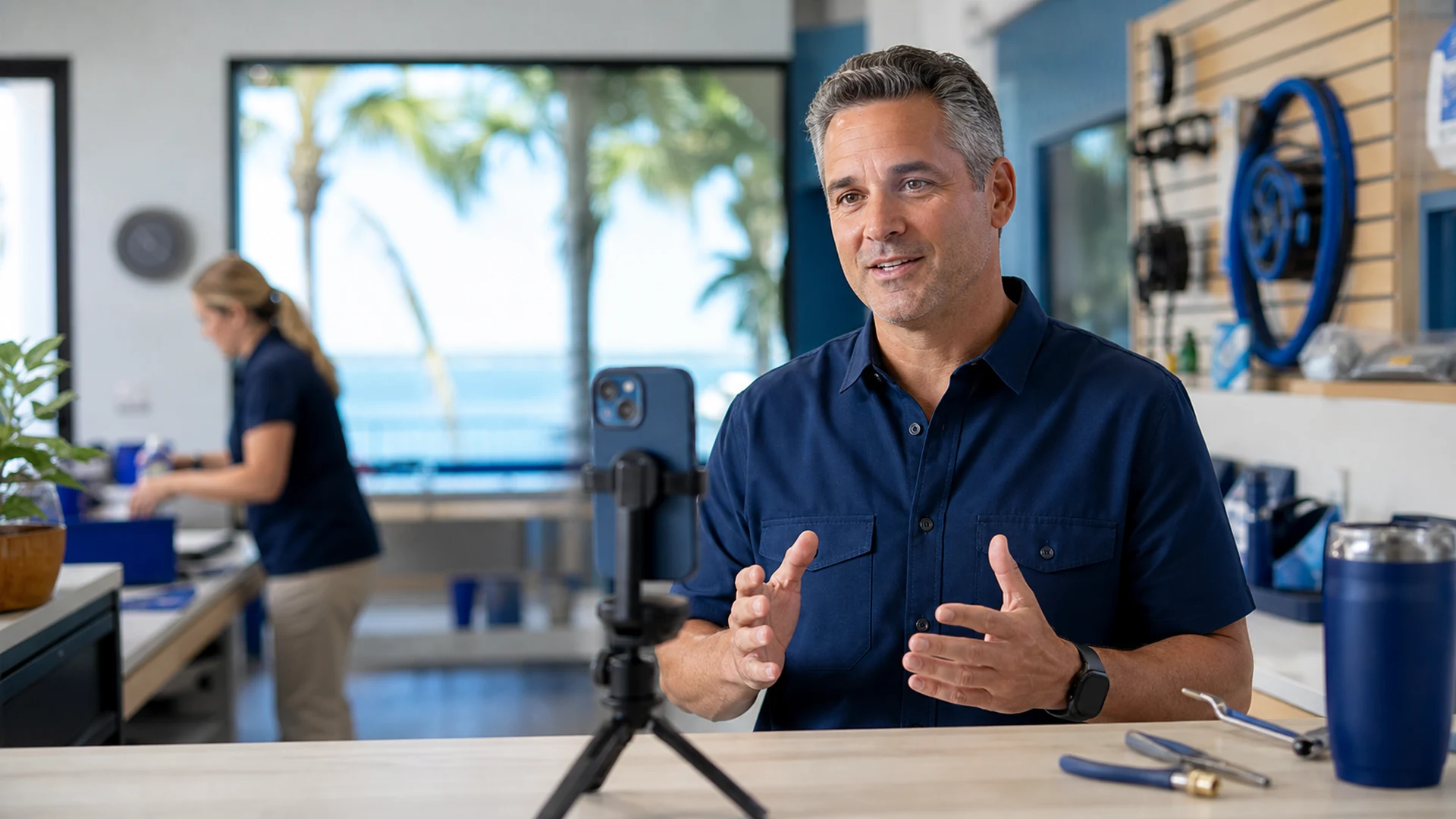
Sometimes, but visibility should have a defined job. An owner may be the right person to explain difficult decisions, demonstrate standards, introduce the team, respond during a change, or teach customers what to expect. That can make abstract claims more concrete. It does not automatically produce reach, rankings, leads, or trust, and it should not require turning private life into marketing content.
For many Sarasota service businesses, the useful middle ground is an owner-led brand rather than an owner-only brand. The owner provides recognizable expertise while the company keeps its own visual identity, channels, customer records, service standards, and other spokespeople. A Sarasota marketing roadmap can define that role around the business model instead of copying an influencer strategy built for a different company.
The decision begins with the company's business DNA and brand identity. If customers hire the business mainly for the founder's judgment, visibility may reduce uncertainty. If delivery depends on a team, a location, or a repeatable system, the content should make those assets visible too. Otherwise, marketing can accidentally tell customers that no one else is qualified to help them.
What an Owner-Led Brand Can Do Well
Owners often hold the richest source material in the company: why a service is performed a certain way, which shortcuts create problems, what customers misunderstand, and how the team makes tradeoffs. Turning that knowledge into clear articles, videos, emails, and sales answers can demonstrate first-hand expertise. Google encourages people-first content that serves an intended audience and shows genuine experience, but it does not say an owner's face is a ranking factor.
Owner visibility can also create continuity across channels. The same person can introduce a new service on the website, answer the related question in a short video, and explain the operational reasoning in an email. The benefit comes from a consistent, useful explanation, not from constant posting. A recognizable spokesperson is especially helpful when a decision involves judgment, safety, money, access to a home, or a long-term relationship.
The owner can support recruiting and team culture as well. A thoughtful explanation of standards, training, and customer care gives prospective employees a view of the company's expectations. The content should still show those standards in practice. A founder saying the team cares is weaker than a documented process, qualified staff, accurate reviews, and customer evidence used with permission.
Recognize the Risks Before Building Around One Person
The first risk is capacity. If every post, approval, video, quote, and customer response waits for the owner, the content system becomes another bottleneck. Missed publishing dates are not the worst outcome. The company may delay useful customer communication because its only spokesperson is selling, delivering work, managing staff, or taking time off.
The second risk is dependence. Customers may insist on speaking with the owner, discount the team's expertise, or interpret an owner's absence as a decline in quality. That becomes more serious during leadership transitions, investment, illness, retirement, or sale. The brand can retain the founder's principles without implying that the founder personally handles every job.
Privacy and reputation also need boundaries. Public content can attract unwanted attention, invite personal commentary, and make spontaneous statements permanent. Decide in advance whether family, home, political views, customer disputes, employee matters, and real-time location information are off limits. Establish an escalation process for legal, safety, crisis, and personnel topics. Being authentic does not mean publishing every opinion.
A useful owner-led brand makes expertise visible without making the company dependent on uninterrupted access to the owner.
Use a Five-Part Decision Test
- Customer value: Identify the uncertainty the owner's presence will resolve. If there is no useful answer, visibility is only decoration.
- Credibility fit: Confirm that the owner has direct knowledge and can stay within qualified, supportable claims.
- Sustainable capacity: Set a realistic recording, interview, review, or writing cadence that the owner can maintain.
- Boundary fit: Document privacy, compliance, customer-permission, and crisis rules before publishing.
- Transferability: Decide how the team, process, and company brand will gain visibility alongside the owner.
A strong yes in all five areas supports a pilot. Mixed answers suggest a limited spokesperson role, such as a monthly expert interview or quarterly business update. A clear no means another model may be better: staff specialists, narrated demonstrations, customer education graphics, case studies, an editorial brand voice, or a rotation of qualified team members. The business can create useful content without putting the owner on camera.
Define the Owner's Content Role and Boundaries
Choose two or three content jobs. The owner might answer pre-hire questions, explain company standards, and comment on significant business changes. A technician might demonstrate maintenance, a service manager might explain scheduling, and customers might contribute approved stories. This role map keeps the owner from becoming the default voice on every topic.
Build content from real conversations rather than asking the owner to perform. Record a structured interview, turn the transcript into a draft, verify the technical statements, and adapt the approved answer into formats suited to each channel. The 90-day customer-question content calendar provides a practical way to connect questions, evidence, owners, and publication priorities. AI tools may help organize or edit the material, but the owner or qualified reviewer should confirm facts and voice.
Set claim rules. Avoid guarantees, superlatives that cannot be proven, comments outside the owner's qualifications, and customer details without permission. If the owner recommends or endorses the company's products or services in a context where the relationship may not be obvious, review FTC guidance on material connections and clear disclosures. A profile bio may not be seen with every post, and the right disclosure depends on the overall context. Get legal advice for a specific campaign when needed.
Build the Company Brand Beside the Owner
Use company-owned accounts, domains, files, analytics, and customer systems for business content. Give the team appropriate administrative access and document usage rights for photos, recordings, and written materials. If an employee or agency manages production, define who owns raw files and who can approve, edit, archive, or remove content.
Feature other credible people before a transition forces the issue. Introduce team members by role, show how work is reviewed, explain the handoff from sale to service, and publish evidence that belongs to the company. Case studies can connect the owner's philosophy to repeatable delivery; our guide to turning a client story into social content shows how to repurpose one approved source without inventing results.
Write a continuity plan. It should state what happens to scheduled content when the owner is unavailable, who can speak during an operational issue, how personal and company accounts relate, and how the brand will communicate a leadership change. This is brand governance, not only content production.
Run a 90-Day Pilot and Measure the Right Outcomes
Select one audience, one recurring question series, and one sustainable primary format. Record a baseline for production time, qualified inquiries, sales questions, website engagement, video completion where available, and team participation. Publish on a planned cadence for 90 days, then review what customers understood and what the process cost. Do not judge the pilot only by followers or views.
Interview customers and staff after the pilot. Did the content help prospects arrive better informed? Did it increase requests that only the owner could handle? Could the team produce and approve the work without operational disruption? Did any privacy or claim issue appear? Continue, narrow, distribute, or stop the role based on those answers. Communica PRO's marketing strategy services can help design this test without promising a fixed attention or sales outcome.
Key Takeaways
- Make the owner visible for a defined customer or business purpose, not because every owner is expected to become a creator.
- Protect capacity, privacy, claim accuracy, and succession before building a personality-led channel.
- Use owner expertise alongside team expertise, process evidence, customer proof, and a distinct company identity.
- Keep business content and data in company-owned systems with documented approvals and rights.
- Test the model for 90 days and evaluate customer understanding, qualified outcomes, production cost, and owner dependence.
Primary Sources and Related Resources
Frequently Asked Questions
Does the owner need to appear on camera?
No. The owner can contribute through interviews, articles, audio, quotes, webinars, or approved scripts, and qualified team members can become spokespeople. Choose the format that communicates useful expertise while fitting the owner's skills, privacy boundaries, and available time.
Will making the owner visible improve Google rankings?
Google does not identify an owner's face as a ranking factor. First-hand expertise and useful, people-first content can improve the quality of a page, but no owner-led format guarantees rankings, AI citations, leads, or sales.
How often should an owner publish content?
Use the cadence the business can sustain without harming operations or quality. One well-prepared monthly interview may be more valuable than daily posts that lack evidence or approvals. Run a measured pilot before committing to a larger schedule.
How can a business avoid depending on the owner?
Feature team members, document processes, use company-owned accounts and files, publish proof tied to the organization, and create a continuity plan. The owner's expertise can shape the brand without making the owner the only credible person customers recognize.
Does an owner need to disclose that they own the business?
When an owner makes promotional recommendations or endorsements and the relationship may not be obvious to the audience, clear disclosure may be necessary. FTC guidance says context matters and a bio alone may not reach everyone. Review the current guidance and seek legal advice for a specific campaign.
Need an Owner-Led Content Model That Can Scale?
Communica PRO helps Sarasota and Southwest Florida businesses turn real expertise into useful content while protecting voice, approvals, privacy, team visibility, and continuity. We build a measurable system rather than promising viral reach.