Google Business Profile Categories: A Selection Guide for Sarasota Businesses
By Marcela Arenas — — Local SEO
How Should a Sarasota Business Choose Google Business Profile Categories?
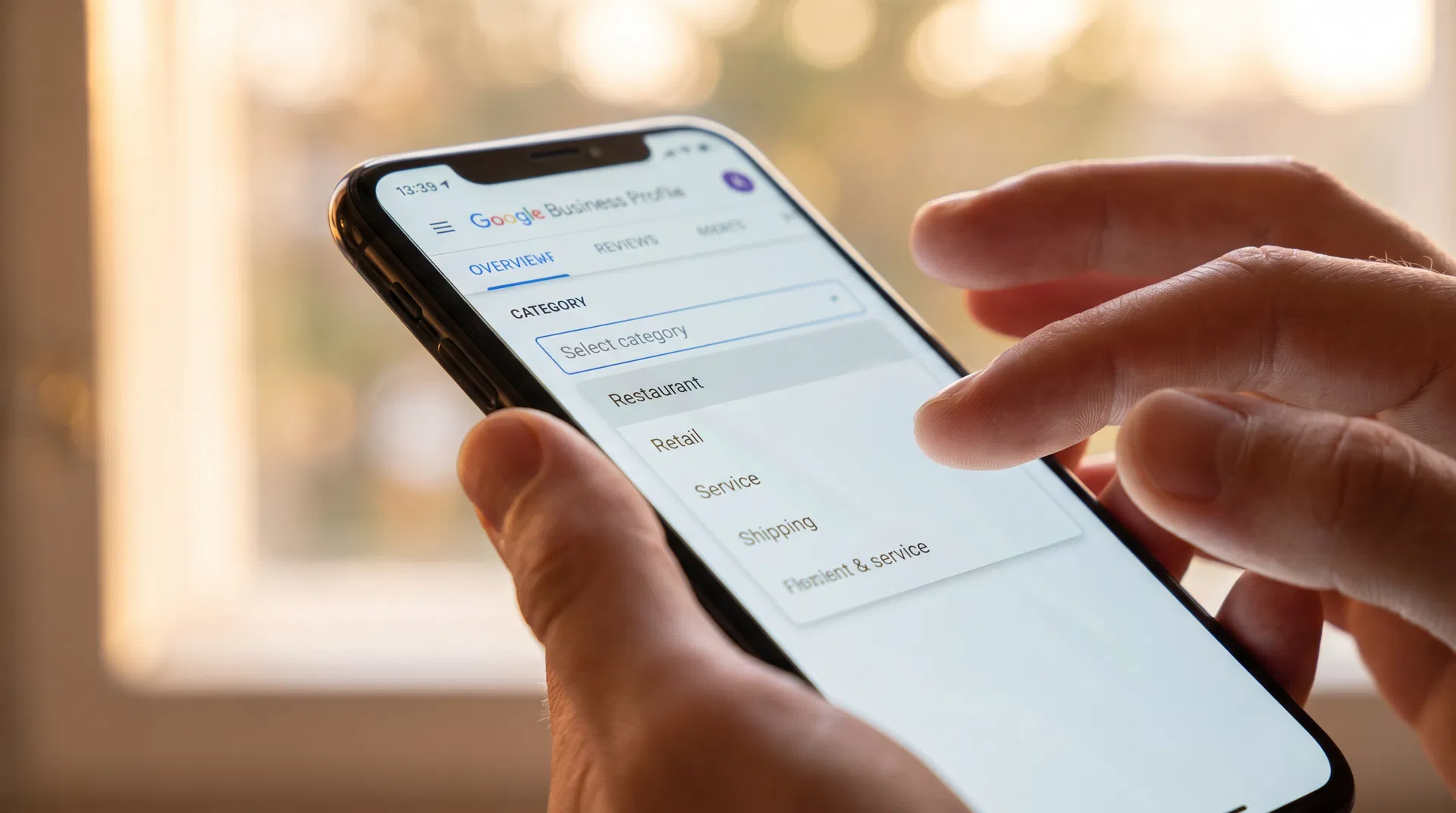
Start with the service or business type that produces the clearest description of your core operation. Google says categories should complete the statement, 'This business is a,' rather than list everything the business has or every service it offers. A plumbing company should normally select a plumbing category, while a marketing agency should select the most accurate agency category available.
Categories matter because they help Google understand relevance. They do not create a guaranteed local ranking. Google explains that local results are mainly based on relevance, distance, and prominence, and that no business can request or pay for a better local ranking.
Use Google's Fewest-Categories Rule
Google's published guideline is clear: use as few categories as possible to describe the overall core business, and choose categories that are specific but representative. Do not add categories solely as keywords, and do not use a category for an amenity, product, or nearby business.
- Select one primary category that best represents the core business.
- Add another category only when it describes a real and important part of what the business is.
- Do not add a category merely because a competitor uses it.
- Do not use categories for future or occasional services that do not define the business.
- Keep the website and service descriptions accurate so the category is supported by clear business information.
How to Audit Categories Without Guessing
- Write one sentence that begins, 'This business is a,' and identify the most accurate completion.
- Review the current primary and additional categories in the Business Profile.
- Compare the available options with the services customers can actually buy today.
- Remove categories that describe keywords, amenities, or marginal offerings rather than the core business.
- Record rankings, calls, website clicks, and profile actions before and after any change.
What Category Changes Can and Cannot Do
A better category can help Google match a profile to more relevant searches. It cannot change the searcher's distance from the business, manufacture prominence, guarantee a top-three result, or force an AI system to recommend the company. Prominence is also influenced by third-party mentions and community recognition—our guide on local sponsorships and community partnerships explains how to evaluate those opportunities. Measure category work as one part of a broader local visibility strategy.
Google Business Profile Category Guidance
Related Resources
Key Takeaways
- Choose the most specific accurate primary category.
- Use the fewest additional categories needed to describe the core business.
- Categories describe what the business is, not every service or amenity it has.
- Accurate categories support relevance but do not guarantee rankings or AI citations.
- Measure changes alongside calls, clicks, rankings, and conversions.
Frequently Asked Questions
What is the best primary category for a Google Business Profile?
Choose the most specific available category that accurately completes the statement, 'This business is a.' The correct choice depends on the business's real core operation, not on which keyword appears most attractive.
How many additional Google Business Profile categories should I add?
Google does not publish an ideal number. Its guideline is to use as few categories as possible to describe the overall core business. Add an additional category only when it accurately represents another important part of what the business is.
Should I copy a competitor's Google Business Profile categories?
Competitor categories can reveal available options, but they are not proof that those options fit your business or comply with Google's rules. Use them for research, then select only categories that accurately represent your own operation.
Can category changes guarantee a higher Google Maps ranking?
No. Accurate categories can improve relevance, but Google says local results are mainly based on relevance, distance, and prominence. Category changes cannot overcome every competitive or proximity factor and do not guarantee a ranking.
Do Google Business Profile categories help AI search visibility?
Accurate categories can make the business easier to classify as part of a consistent digital presence. However, Google and other AI systems do not publish a formula that guarantees a recommendation or citation based on categories.
Is Your GBP Category Costing You Rankings in Sarasota?
Communica PRO can audit your Google Business Profile, local rankings, reviews, citations, website alignment, and conversion tracking, then prioritize the gaps you can influence. We will explain the priorities, scope, and measurement plan before you decide how to proceed.